

Easy? Not Exactly.
homesteading through a chaotic week

Like most things, our society prefers to categorize them into binary terms. Soft, hard. Light, dark. Easy, hard.
Homesteading is not immune. It’s a label that conjures specific images of what I should look like and wear, how large my family should be, who I should be married to, and what spiritual guide I choose to pray to. In addition to these more polarizing stereotypes, we also tend to refer to homesteading as easy and slow. With Lionel Richie playing in the background, we paint a picture of every day feeling like Sunday. We are choosing a slower, more hands-on method for at least some of what we consume. That does not mean it’s easy, or even that our days feel slow.1 For those things, we are NOT choosing convenience.
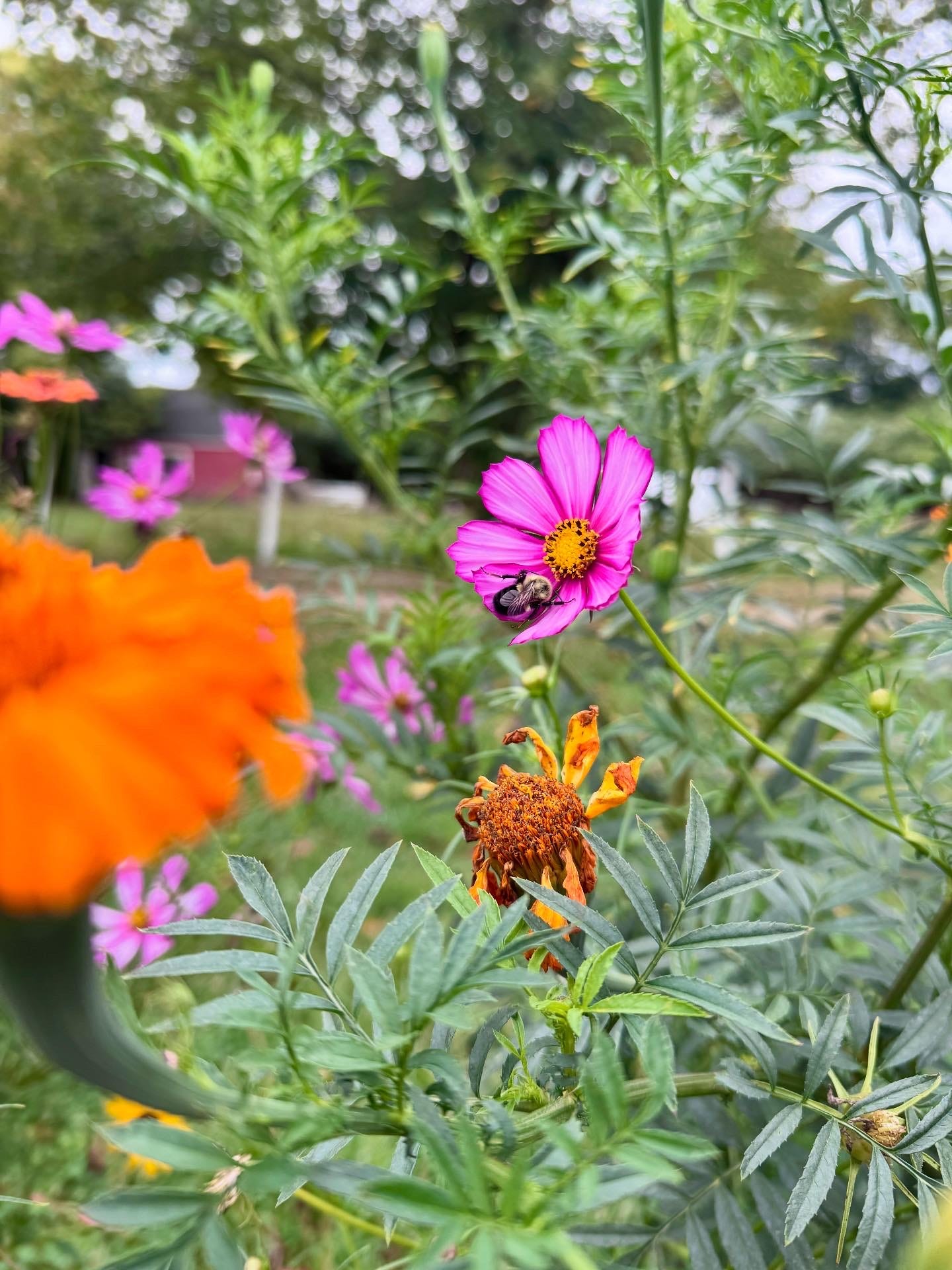
I bring up convenience, which is closely tied to comfort - fast food, condos, microwave meals, processed foods, virtual community, cleaning wipes, single-use everything - because this is what I think people (who don’t homestead) truly mean when they ask me “isn’t it hard?” “isn’t it uncomfortable (insert dirty, sweaty, bloody, etc.)” about homesteading.
The truth is yes. It is inconvenient. I can tap a few icons and type a few words on my phone at any hour of any day to preorder most of the food I grow in my garden or preserve and store in my pantry. And that’s not a knock on ordering groceries for pickup because it is something I do weekly as a working mother of two trying to homestead (my grocery order is just mostly whole food ingredients).
Like most things, convenience exists on a spectrum and within a greater context. As an urban homesteader, it’s a lot easier for me to hit up the grocery store for fresh tomatoes (year-round) than plan ahead to visit a farmer’s market or grow them myself. More rural folks may say it’s way easier to just grow them! And then some benefits don’t translate into financial or temporal categories, like the mental benefits from working with your hands, creating what you consume, and generally becoming more connected to the earth (because there is no way to homestead without aligning your life and daily rhythms with the seasons, to at least some degree).

I want to tell you it’s easy. I want to paint a picture of how at peace I am while harvesting my garden in the middle of the day on a Monday with my toddler playing in the mud kitchen I built of repurposed materials, or share pictures of my kids kissing worms and tell you that they learned the difference between green and red by identifying ripe tomatoes and counted to ten the first time planting peas.
It’s all true, so I guess I could leave it at that. It’s where most sharing about this lifestyle as content creators or garden influencers choose to drop the topic. But it’s not the whole picture.
My house is small and cramped. We are always on the go. Always late due to traffic since we are an urban homestead living in a (too) rapidly growing metropolis. I often forget diapers. My kids go a few days between baths (so do I). I have days (& strings of days) when my almost 2-year-old will not let me put him down without crying. We have one goat who eats everything and is a straight-up dick to the kids. My tomatoes are dying and look so bad that I’ve taken to buying them from the farm market down the street. And every time I sit down to read or watch TV, I am reminded of a task I started days earlier and have yet to finish (& immediately stand back up).
So it may be picturesque in the curated and cropped kind of way, but it’s not quite easy. Instead, I’d say it becomes routine. You develop a second nature for the “homesteady” things, and they fall naturally into the fabric of your daily life. When I pull out my sourdough starter on a Friday morning so that my family can have fresh bagels on Saturday morning for breakfast, I am not thinking “this is so inconvenient”. The “slowness” of everything we do on the homestead becomes second nature.

I love the booktok accounts that share “what I read in a week” posts, so I thought I’d share “what I homesteaded this week” as a way to exemplify how we maintain a certain level of homesteading through a chaotic week. I wouldn’t say that our life this week has been normal - we’ve all been sick, it’s our first week with a new family routine, and we have weekend plans that are taking some of us out of town.
•Friday: early morning walk about in the garden and making a quick bouquet; 1 hour in the garden harvesting, watering seedlings, and planting peas; canned up 22 pints of pizza sauce (that I started on the previous Monday)
•Saturday: started fermenting peppers for hot sauce (could take a month or longer), made marigold garland with Rory (our 4-year-old); briefly watered the garden; changed the goat water
•Sunday: 30 minutes in the garden; made fresh pico for the week, started cooking down 25 pounds of tomatoes; sorted onions and stored in a new cabinet inside
•Monday: 10 minutes in the garden (basically just keeping stuff alive); bought seedlings at the nursery (plant therapy); strained the tomatoes I cooked the day before; prepped a couple of dinners for this week; made dishwasher powder
•Tuesday: 5 minutes harvesting lettuce for dinner
•Wednesday: watered seedlings; Rory sorted beans and shelled some others; added the beans to the dehydrator; burped the fermenting peppers; goat chores
•Thursday: burped the fermenting peppers; harvested a tomato and some rosemary from the back garden
•Friday: fed my stiff sourdough starter; started a levain for bagels; watered seedlings in the greenhouse; changed the goat water
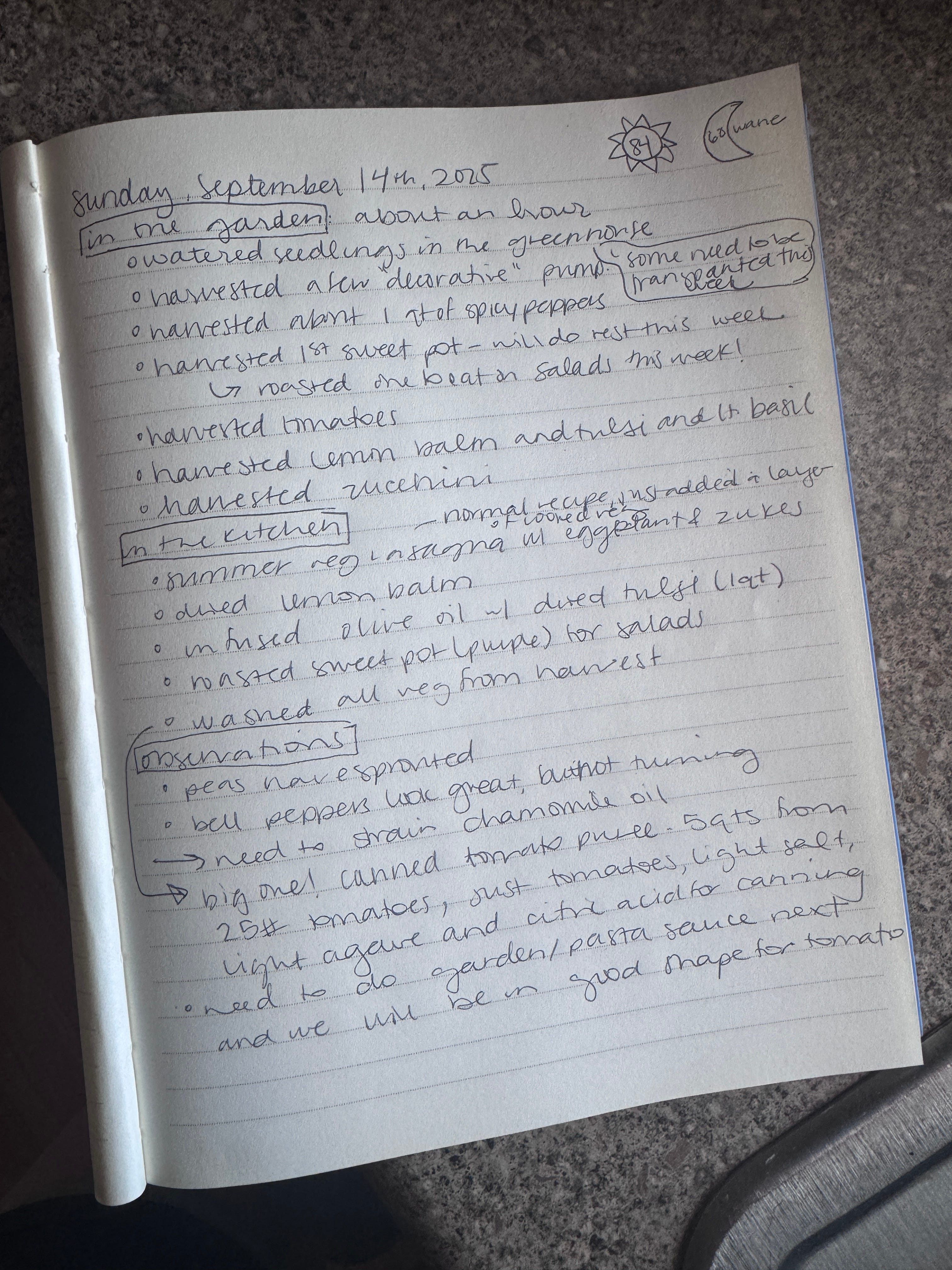
After reading Frozen River by Ariel Lawhon in March or April of this year, I decided to start keeping a “daybook”. I’ve always loved journals but am notoriously bad at consistently sitting down to write in them. A daybook has been much more approachable because it’s fact. Here’s what we did, what life was like, something I should remember for later (like what day I infused that oil or what recipe I used), the weather, etc. In the novel, the daybook is used as evidence in court and passed down from generation to generation as a resource for midwives and way to collect ancestral knowledge. It has been a much better use of my time than journaling, which, the way I was doing it, was perpetuating cycles of negative thought.

Most people refer to the state of their homes as a reflection of their mental status. I think it’s true for me, just in the opposite way you’d expect. When our house is cluttered and the laundry is undone, I’m actually feeling amazing. It’s a sign that I’m happy and content to relax. I’ve found some sort of balance in my day. When things are picked up and put away, floors are mopped, and laundry is tackled, I know I’m having a tough week. I’m unsettled, finding it hard to fall asleep or relax, and so I clean and tidy. The mess becomes a personal attack, and I grumble as I throw things away, pick up dirty socks, and pile up books. This is the week I’m having, but hey, at least my house is clean (I say that with a caveat bc we are NOT clean house people, it’s just impossible around here).

I also started a "farm diary" almost a year ago and it's amazing to check what was I planting, recall situations and what was happening with the animals. I love it.